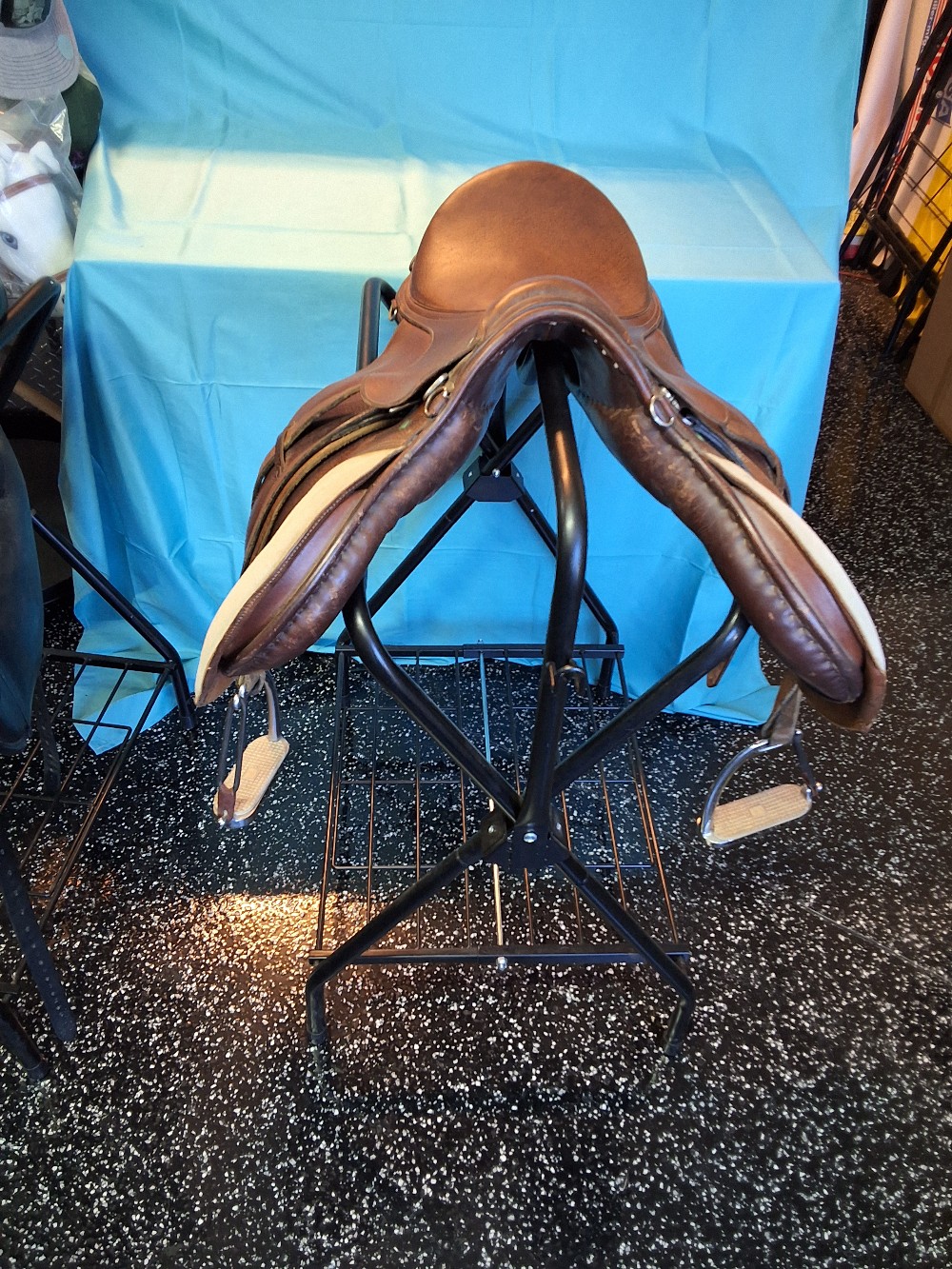
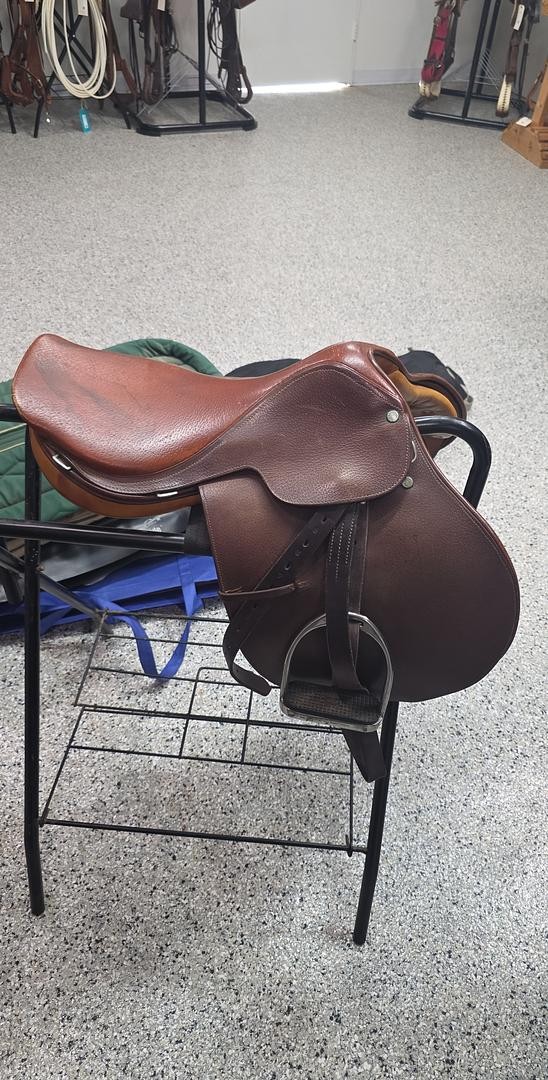
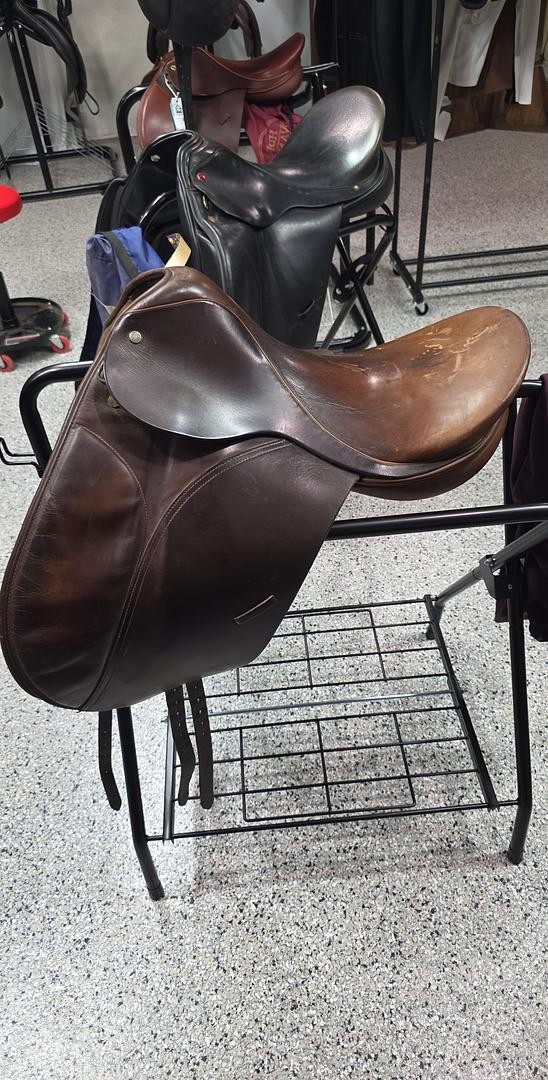
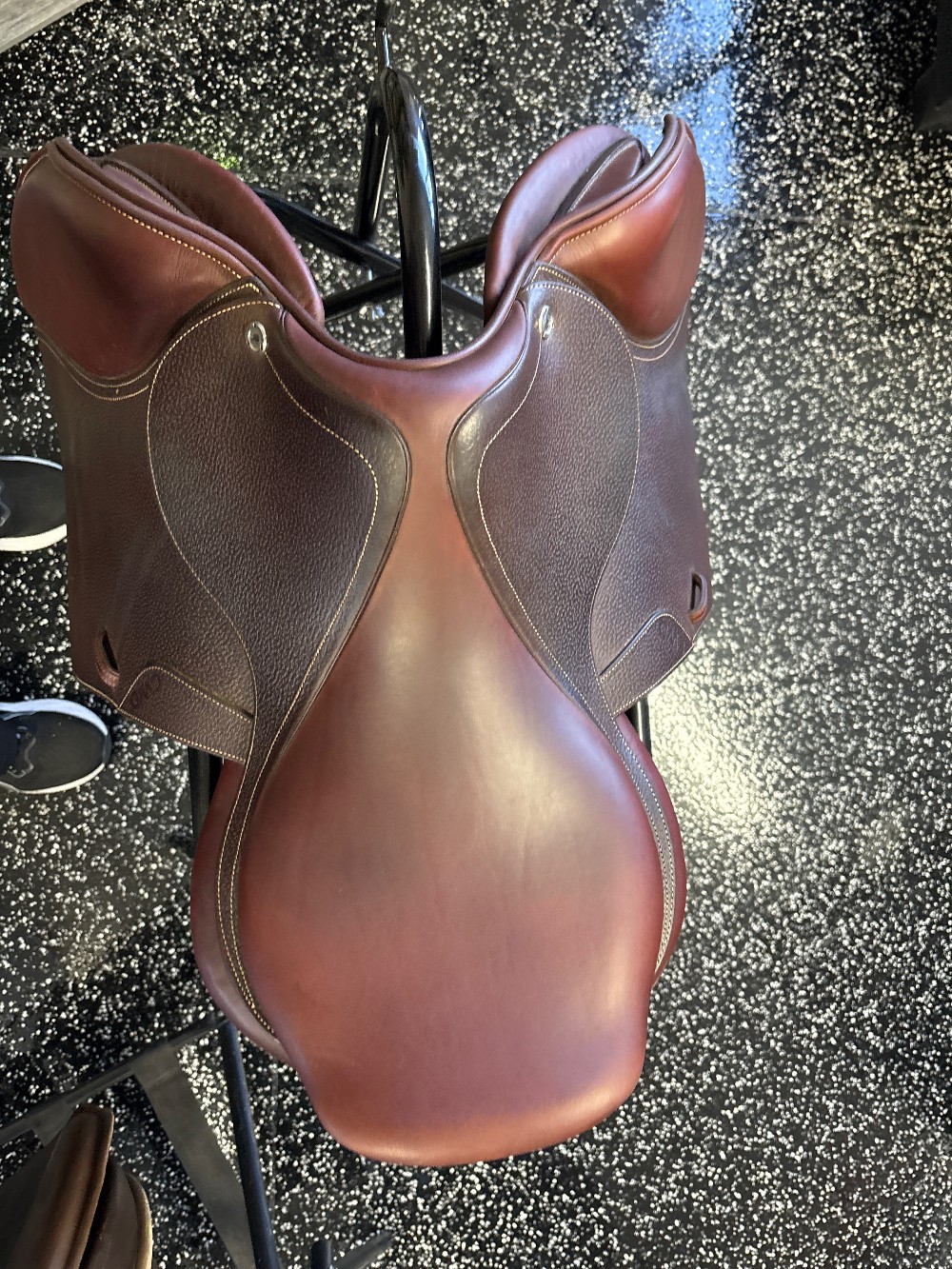
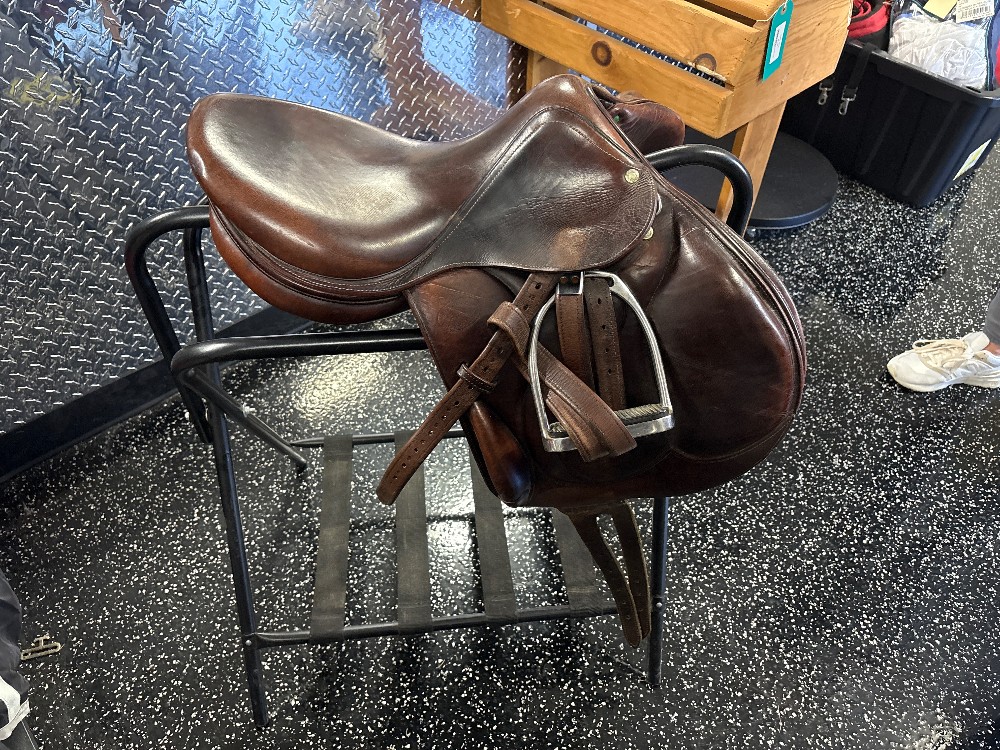
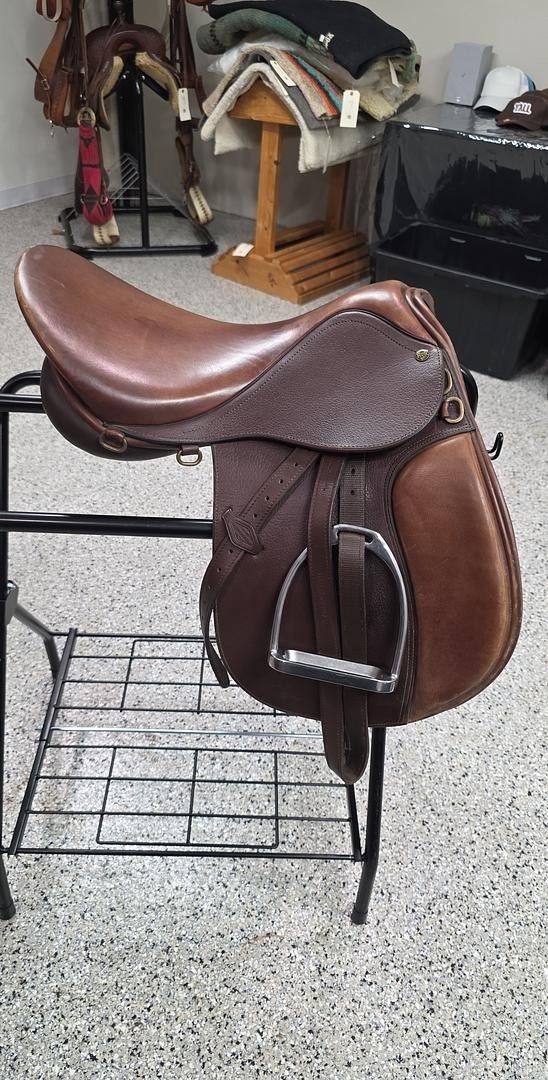
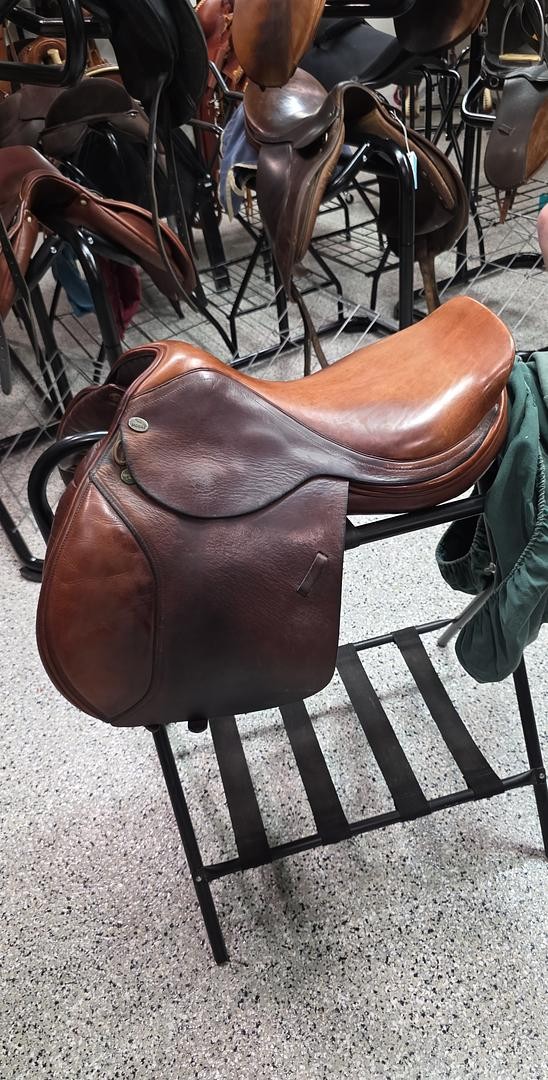
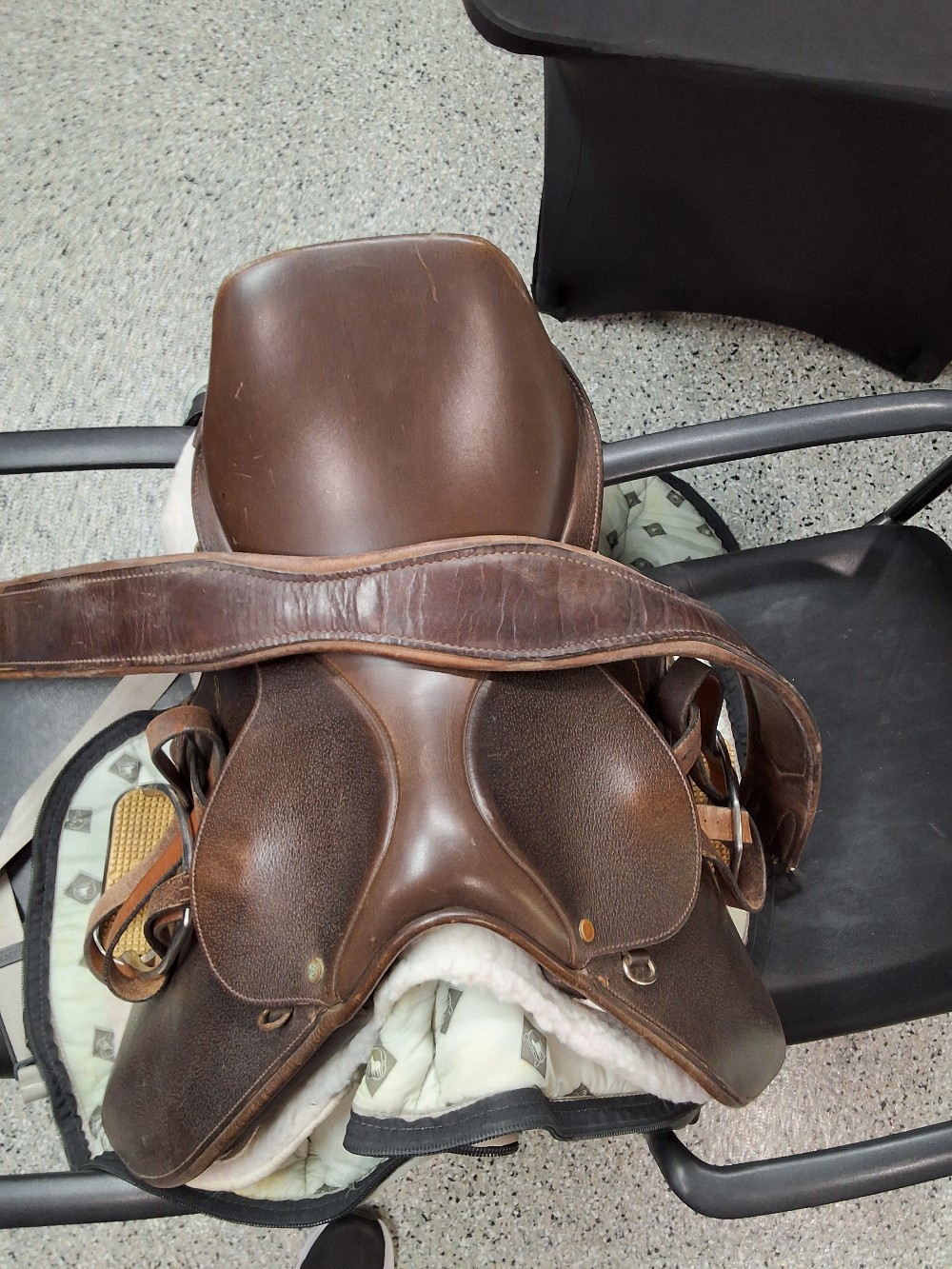
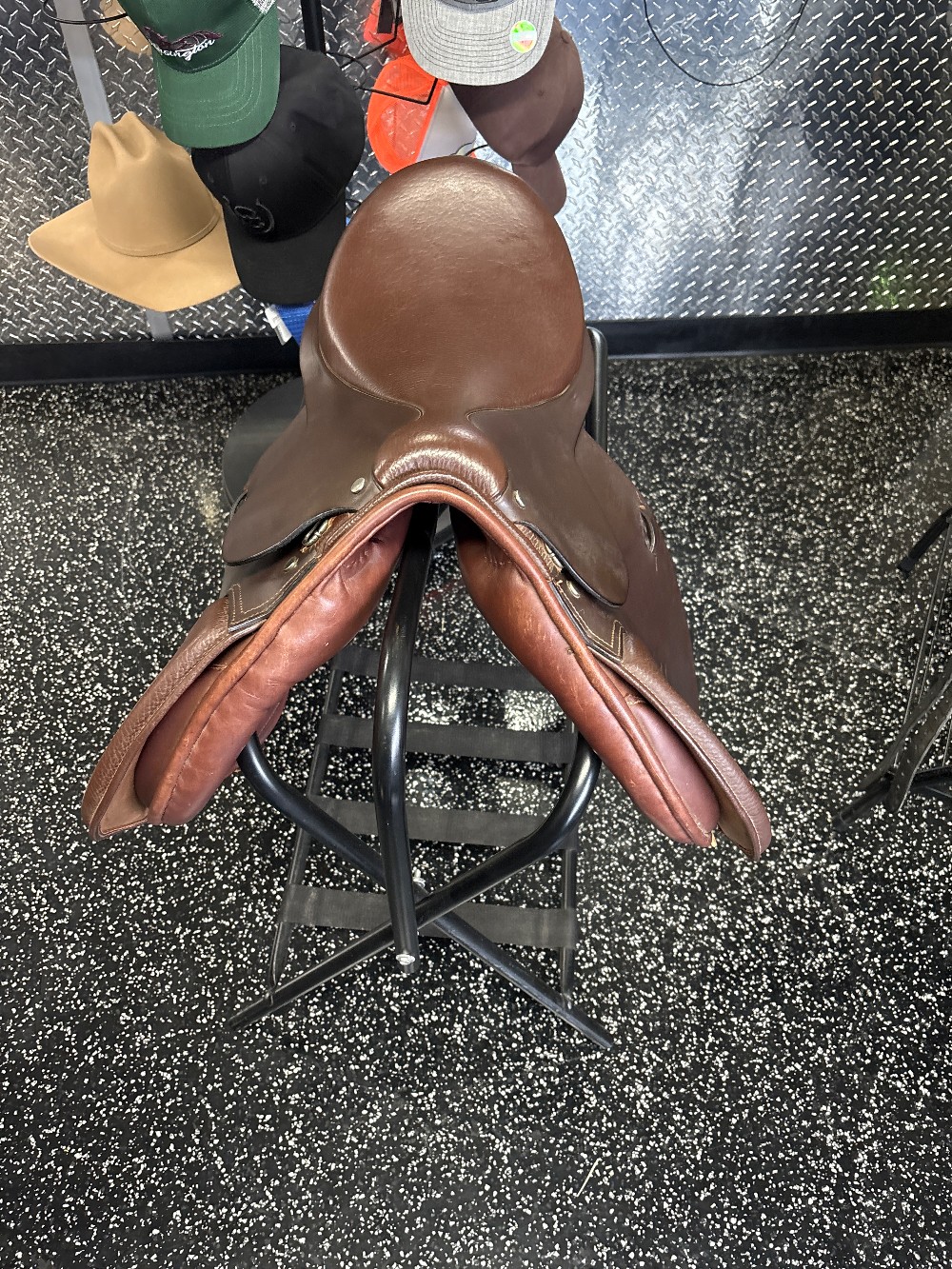
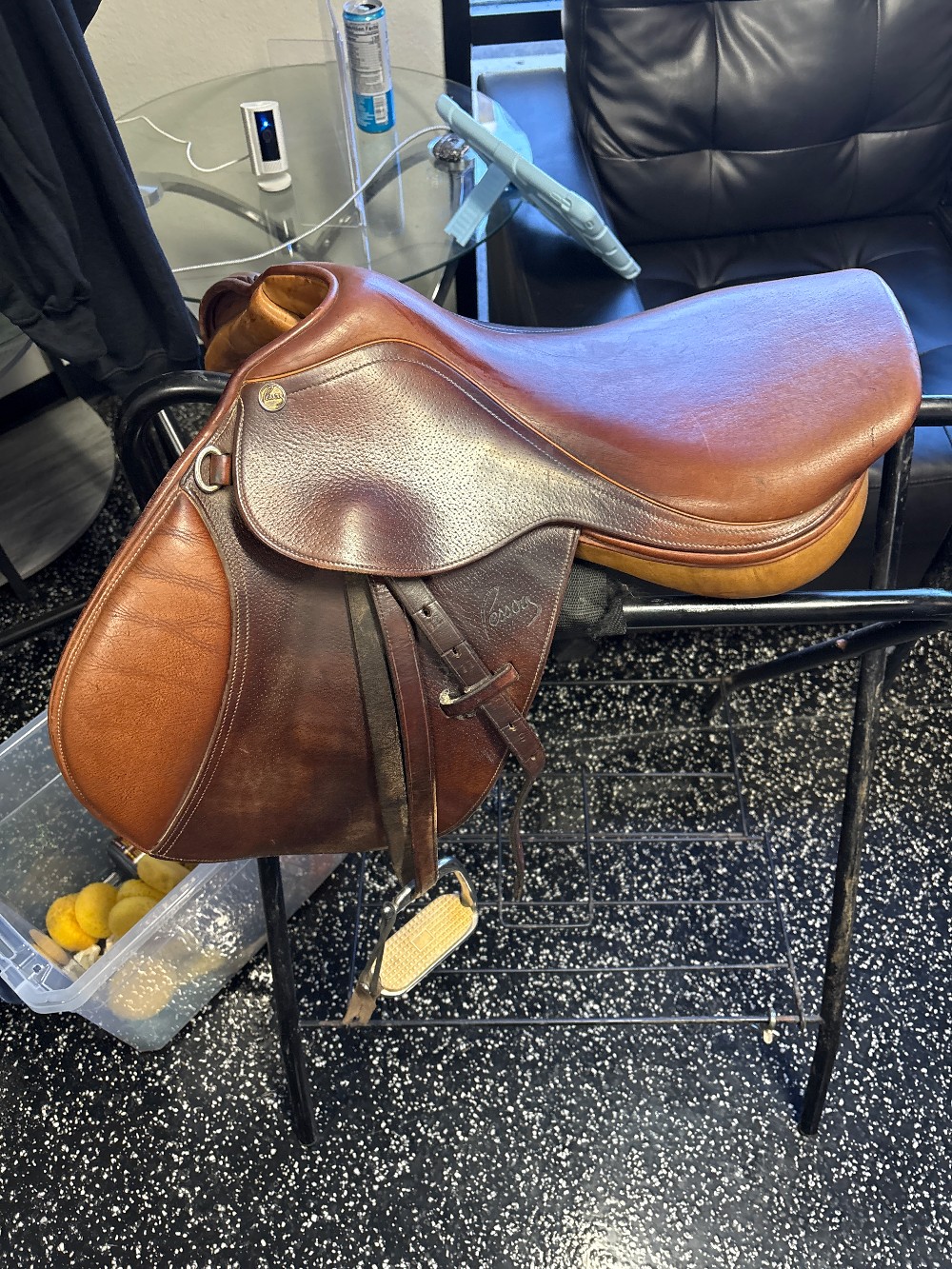
A jumping saddle (or close-contact saddle) is an English-style saddle designed for jumping and hunting, featuring a shallow-to-flat seat and forward-cut flaps to accommodate short stirrups and a forward rider position. It typically includes prominent front and rear knee/thigh blocks for security and utilizes panels that allow the horse to lift its shoulders and move freely. +5 Key Design Features: Forward-Cut Flaps: Positioned forward to accommodate the shorter stirrup length required for jumping, allowing the leg to hang naturally. Shallow/Flat Seat: Provides the rider with freedom of movement to shift weight and balance over fences. Knee and Thigh Blocks: Padded, often adjustable, blocks under the flap offer support and stability for the rider’s leg during takeoff and landing. Close Contact: Designed to minimize layers between the rider and horse, enhancing communication and feeling of the horse's back. Panel Structure: Panels are often designed to be wide and soft to distribute weight evenly, ensuring the horse has maximum freedom of movement, particularly in the shoulder area. +8 Variations: Monoflap (Single Flap): Features a single flap with long girth straps, offering maximum close contact and less bulk under the rider's leg. Dual Flap: Traditional design with a separate knee pad flap and lower flap, with shorter girth straps. Cross-Country Saddle: Similar to a jumping saddle but with more pronounced knee/thigh blocks and an even more forward seat for safety and security over solid, high-speed jumps. +4 These saddles are essential for providing the proper balance and freedom for both horse and rider in jumping disciplines, allowing the rider to easily adopt a two-point position